



I need to structure my operation
For companies that need to integrate Marketing, Sales and Customer Success, improve pipeline and forecasting, organize CRM and prepare the operation for AI and automation leverage.
Gabriel Pavão connects GTM, Marketing, Sales and Customer Success through processes, data, technology, governance and metrics to build more integrated and predictable revenue operations.
AI is leverage. RevOps is architecture. Predictable growth is the consequence.
Executive · Professor · Speaker · Revenue Operations · Revenue Architecture · AI applied to business
For companies that need to integrate Marketing, Sales and Customer Success, improve pipeline and forecasting, organize CRM and prepare the operation for AI and automation leverage.
Explore Gabriel's track record, capabilities and results in Revenue Operations, GTM, Sales Operations and business transformation.
Hands-on training in processes, data, technology, governance and integration across Marketing, Sales and Customer Success.
Keynotes on RevOps, Revenue Architecture and AI applied to business for leaders and teams.

Pipeline, CRM, forecasting, automation and AI do not work in isolation. When Marketing, Sales and Customer Success use different processes, data and criteria, the company loses context, speed and decision-making capacity.
AI without architecture accelerates chaos.
Gabriel Pavão's Revenue Architecture Framework organizes the operation across three dimensions: the complete customer journey, the operational foundation and the leverage technologies.
RevOps governs the system. AI expands what has been well designed.
A structured review of the operation to identify bottlenecks, cross-functional conflicts, data and governance issues, and real transformation opportunities.
Diagnose my operationDimensions assessed
Before choosing a tool, understand the process, the data, the integrations, the risks and the decision that needs to improve. The AI Map helps assess readiness before implementation.
Is the workflow documented with clear criteria?
Is the data reliable, accessible and based on shared definitions?
Is there an owner for every process, data set and decision?
Is it defined what AI may execute and what requires human approval?
Can decisions, errors, exceptions and outcomes be monitored?
AI without architecture accelerates chaos.
Gabriel's perspective was built through executive leadership, company building and operational transformation, connecting technology, GTM, process, data and scale.
Executive leadership · Operations at scale
While leading consumer and creator economy operations, Gabriel worked on designing and running a revenue operation that required integration across GTM strategy, commercial processes, data, governance and execution.
Demonstrated capability: lead the operation, organize decisions and connect growth with execution discipline.
Company building · Technology and consulting
By founding and operating a technology consultancy, Gabriel experienced company building from the inside: connecting the offer, commercial processes, specialized recruitment, delivery and growth without separating technology from operations.
Demonstrated capability: build and operate a company, turning technical knowledge into a commercial process and delivery.
Scale case · Creator commerce
Gabriel participated in structuring revenue for a creator operation that grew from R$22 million to R$600 million in revenue and from 30,000 to 90,000 creators, operating across 11 countries.
Factual evidence of the context: revenue, data and operational scale. Creator commerce appears here as proof of application, not as the center of the positioning.
This experience supports his work today: diagnosing, designing and evolving revenue systems through process, data, technology, governance and AI.
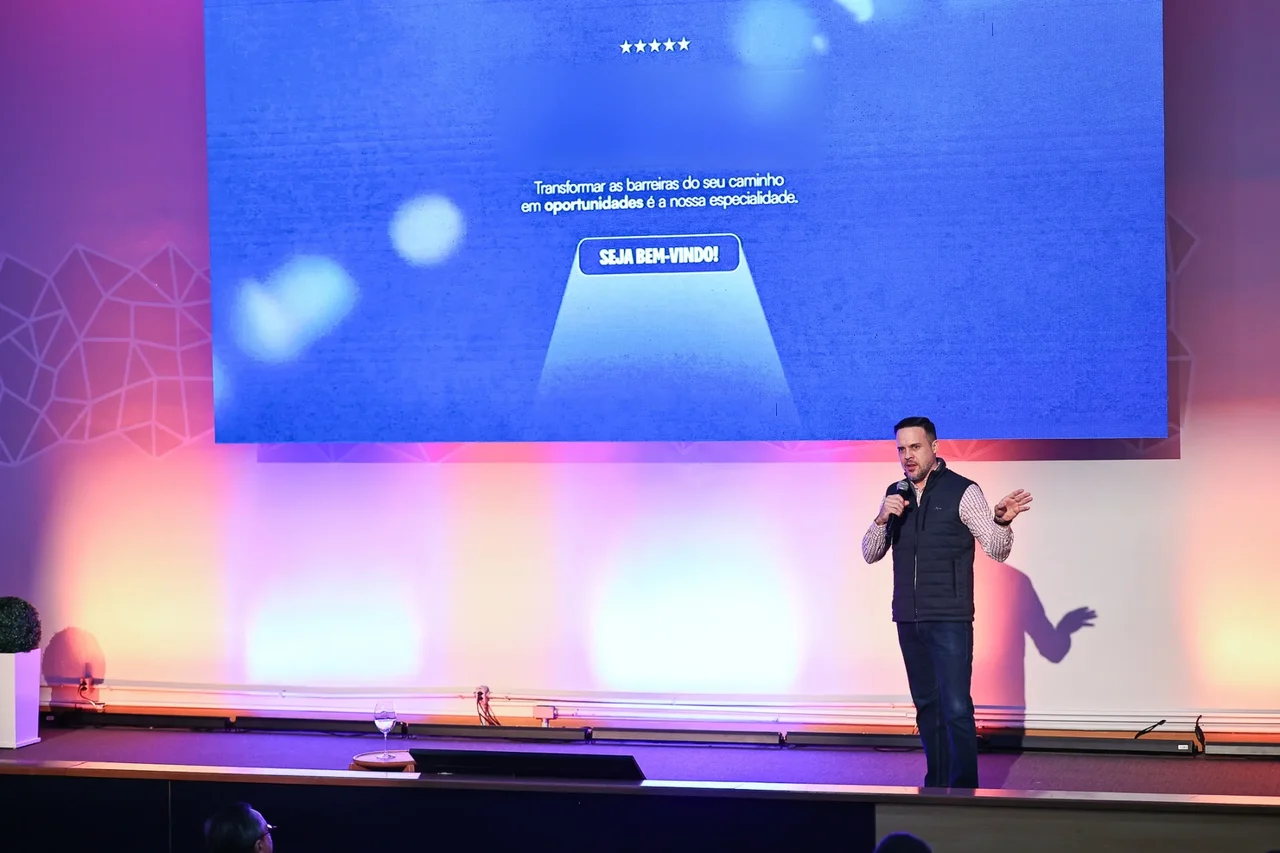
Gabriel Pavão is an executive, professor and speaker specialized in Revenue Operations, Revenue Architecture and AI applied to business.
The RevOps Training translates executive experience and revenue architecture into a complementary learning journey, without replacing diagnostics and consulting work.
Explore the RevOps TrainingKeynotes bring RevOps, Revenue Architecture and AI into executive conversations. The press provides external validation through interviews, articles and reports already published.
Keynote topics
Companies and brands Gabriel has worked with throughout his career











"Gabriel brings a reading most speakers don't reach. He connects behavior, data and capital into a single narrative."
"It's hard to leave one of his talks without rethinking the structure of your own operation. It's the rare combination of depth and clarity."

It is not just a new team, tool or dashboard. It is the discipline that connects Marketing, Sales and Customer Success around shared process, data, technology, governance and metrics.

The question is not how to use more AI. It is where AI can expand an operation that already has context, process, data and governance.
Automation · Copilots · Agents · CRM · Data · Sales · Marketing · CS
A direct cut from what Gabriel has been saying about revenue, technology and decision making.
That's the path along which I helped one of Brazil's largest consumer brands go from R$22 million to R$600 million in revenue, with an operation that grew from 30 to 90 thousand creators in three years and reached 11 countries.
Three to four short reads per week. Category, title and a direct link to the full piece, to keep track of what shifts below the waterline.
There is no official RevOps track, so the order matters more than the list. Process and data first, then tools, AI last, and proof of operation in the middle of it all.
Revenue architecture consulting determines structure: journey, foundation, and leverage. The deliverable is not a report, it's a system with owners, definitions, and a forecasting routine.
RevOps is still an emerging market in Brazil. This creates opportunity and noise: the same title conceals very different roles. Reading the job posting is part of the skill set.
Most AI talks deliver enthusiasm and no decisions. What leadership needs to take away from the room is criteria: where AI fits, where it doesn't, and what needs to exist beforehand.
Five stages, one single question: what did you see before everyone else? Every episode ends with a Depth Capture, the sentence that summarizes the dive.
For leaders, executives and entrepreneurs who need to make decisions before the numbers confirm the direction. The book describes the Theory of Strategic Depth: how to see the signals below the surface of the market.
There is no public release date yet. Those who join the waitlist receive priority updates, exclusive content and invitations to the launch events.
It's a ten-episode season, organized in five stages, with a central question: what did you see before everyone else? Every episode closes with a Depth Capture, the sentence that summarizes the dive.
The application goes through a curatorial review. The invitation is sent by email and includes a secure link to confirm availability, recording details and automatic reminders.
The podcast brings the stories behind the thesis. While the book systematizes the method, the episodes show how different leaders saw it first and built results from there.
Creator commerce is the territory where the creator stops being just media and becomes a measurable sales channel. That's the path along which I helped a consumer brand multiply revenue by approximately 27 times.
Yes. Through the contact page you send the event briefing. The team replies within two business days with availability, format and investment.
Yes. Beyond speaking, Gabriel works on consulting for companies that need to structure a growth system and RevOps, training for sales and marketing teams, and one-on-one mentoring for executives deciding under pressure. Each format has its own scope and investment, defined after an initial conversation.
In the Weekly signals section on the home page and on the blog. That's where I publish editorial cuts on leadership, growth, AI and Creator commerce.
Start with a structured reading of the operation. From there, it becomes clearer what needs governance, integration and preparation for AI.